
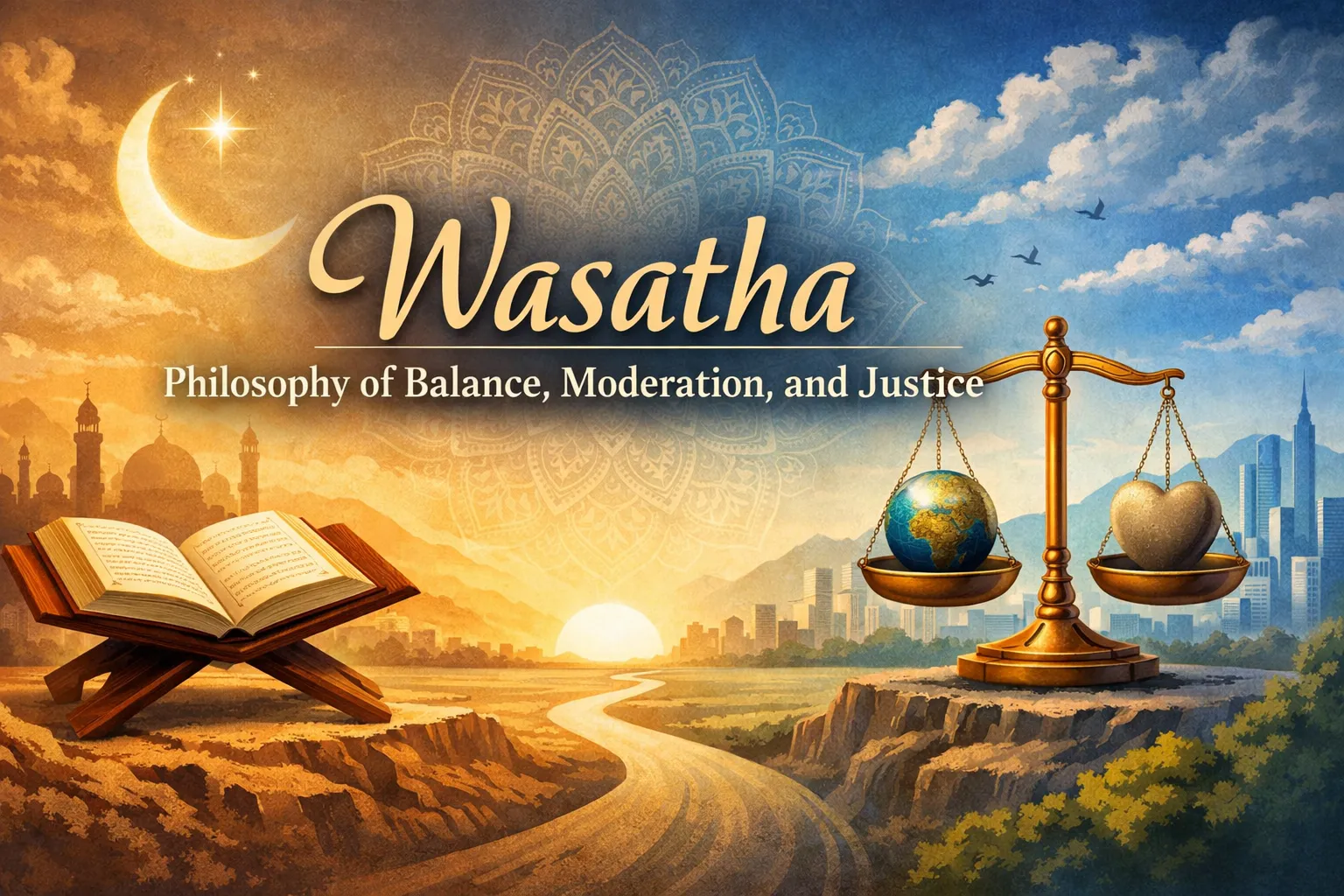
In a world where opinions, lifestyles, and beliefs often move toward extremes, the concept of Wasatha offers a powerful reminder of the value of balance and moderation. Rooted in Arabic linguistic tradition and deeply connected with ethical and philosophical thought, Wasatha represents a principle that encourages individuals and societies to follow a middle path. It promotes harmony between different aspects of life and discourages excess, rigidity, or imbalance.
The idea of Wasatha has gained attention in discussions related to religion, ethics, leadership, and social behavior. While it originates from Arabic culture and Islamic teachings, its message resonates universally because it addresses a fundamental human need: maintaining equilibrium between opposing forces. Understanding Wasatha helps individuals cultivate fairness, wisdom, and responsible decision-making in personal and social life.
Understanding the Meaning of Wasatha
The term Wasatha comes from the Arabic root word wasat, which literally means middle, center, or balanced position. Linguistically, it refers to something that lies between two extremes. Over time, the meaning expanded beyond its literal sense to represent moderation, fairness, and justice.
In philosophical and ethical discussions, Wasatha signifies a balanced state in which a person avoids both excess and deficiency. Instead of adopting extreme positions, individuals guided by Wasatha choose a path that harmonizes different aspects of life. This approach promotes thoughtful decision-making and encourages people to consider multiple perspectives before forming judgments.
Wasatha is not simply about compromise or neutrality. Rather, it represents the pursuit of equilibrium where wisdom and fairness guide actions. In many traditions, balance is viewed as a key element of a healthy life, and Wasatha embodies this idea by encouraging individuals to maintain proportion in their thoughts, emotions, and behavior.
Wasatha in Cultural and Religious Contexts
The concept of Wasatha is particularly significant within Islamic teachings, where it is often linked to the principle of Wasatiyyah, meaning moderation or balanced living. The idea appears prominently in the Quran, where the Muslim community is described as an “Ummatan Wasatan,” often translated as a balanced or middle nation. This description emphasizes justice, fairness, and responsible conduct.
Within this context, Wasatha encourages believers to avoid extreme interpretations or behaviors that could lead to imbalance in religious practice or social interaction. Instead, it promotes a harmonious approach that integrates spiritual devotion with practical responsibilities in everyday life.
Scholars frequently interpret Wasatha as a guiding principle for ethical conduct. It suggests that individuals should balance their obligations toward faith, society, and personal well-being. This balanced perspective allows people to remain spiritually committed while also engaging constructively with the broader world.
The Philosophy of Moderation and Balance
Beyond its religious roots, Wasatha can also be understood as a broader philosophical concept. Many intellectual traditions emphasize the importance of moderation as a pathway to wisdom. In this sense, Wasatha aligns with global philosophical ideas that advocate equilibrium between opposing forces.
When applied to human behavior, Wasatha encourages individuals to regulate their emotions, desires, and ambitions. For example, excessive ambition may lead to stress and unethical actions, while a complete lack of ambition may hinder personal growth. The principle of Wasatha suggests finding a balanced level of motivation that supports progress without causing harm.
Similarly, in social relationships, Wasatha encourages fairness and empathy. It discourages extreme reactions such as hostility or indifference and instead promotes thoughtful engagement. By maintaining moderation, individuals can create stronger relationships and more stable communities.
Ethical Dimensions of Wasatha
One of the most important aspects of Wasatha is its ethical significance. The concept encourages people to adopt moral behavior that reflects justice, compassion, and responsibility. Ethical moderation involves recognizing the consequences of actions and striving to achieve outcomes that benefit both individuals and society.
Wasatha also promotes fairness in decision-making. Rather than acting impulsively or based solely on personal interests, individuals guided by this principle consider the well-being of others. This approach leads to more balanced and equitable outcomes in social interactions, governance, and leadership.
In many discussions about ethics, Wasatha is viewed as a safeguard against extremism. When individuals or groups adopt extreme viewpoints, conflicts and misunderstandings often arise. Wasatha encourages dialogue, reflection, and cooperation, helping communities maintain stability and mutual respect.
Wasatha in Leadership and Governance
Leadership often requires the ability to balance competing interests and perspectives. The philosophy of Wasatha provides valuable guidance in this context by emphasizing fairness, wisdom, and moderation. Leaders who adopt this approach strive to create policies and decisions that reflect the needs of diverse communities.
Balanced leadership involves careful evaluation of options rather than impulsive decision-making. A leader guided by Wasatha considers long-term consequences and seeks solutions that promote harmony rather than division. This approach fosters trust and encourages collaboration within organizations and societies.
In governance, Wasatha can also serve as a framework for justice. Policies based on balanced principles aim to protect rights while maintaining social order. By avoiding extremes in legislation and administration, governments can create environments where citizens feel respected and supported.
Social Harmony and Community Building
Wasatha plays a vital role in promoting social harmony. Communities often consist of individuals with diverse beliefs, values, and backgrounds. Without a commitment to moderation and balance, these differences can lead to conflict and misunderstanding.
The principle of Wasatha encourages dialogue and mutual understanding. Instead of imposing rigid viewpoints, it promotes respectful communication that acknowledges different perspectives. This balanced approach helps communities resolve disagreements constructively and maintain a sense of unity.
Furthermore, Wasatha supports the idea of shared responsibility. Individuals are encouraged to contribute positively to society while respecting the rights of others. By maintaining balance between personal interests and collective well-being, communities can achieve greater stability and cooperation.
Wasatha in Personal Development
On an individual level, Wasatha offers valuable guidance for personal growth and self-awareness. Many challenges in life arise from imbalance, whether in emotional reactions, lifestyle choices, or priorities. By adopting the principles of Wasatha, individuals can cultivate healthier habits and more thoughtful perspectives.
Personal balance involves managing time, energy, and resources effectively. For example, balancing work and rest allows individuals to remain productive without experiencing burnout. Similarly, maintaining equilibrium between ambition and contentment helps people pursue goals while appreciating their present circumstances.
Wasatha also encourages emotional regulation. Instead of reacting impulsively to challenges, individuals guided by this philosophy seek calm and thoughtful responses. This balanced mindset contributes to resilience and allows people to navigate difficulties with greater clarity.
The Relevance of Wasatha in the Modern World
In the modern era, societies face complex challenges related to technology, politics, culture, and global interaction. Rapid changes often create tensions between traditional values and new ideas. The concept of Wasatha offers a framework for navigating these complexities by emphasizing balance and moderation.
In social media environments, for instance, extreme opinions can spread quickly and intensify divisions. Wasatha encourages individuals to approach discussions with openness and critical thinking. Rather than reacting emotionally to every debate, people can use balanced reasoning to evaluate information and form thoughtful conclusions.
Similarly, in economic and professional life, Wasatha highlights the importance of ethical progress. Pursuing success without considering ethical boundaries can lead to harmful consequences. A balanced approach ensures that growth and innovation occur alongside responsibility and fairness.
Educational and Intellectual Perspectives
Educational institutions also benefit from the principles of Wasatha. Balanced learning environments encourage critical thinking, respectful debate, and intellectual curiosity. Students exposed to diverse viewpoints develop a deeper understanding of complex issues and learn to appreciate different perspectives.
Wasatha in education promotes moderation in both teaching and learning. Instead of focusing solely on theoretical knowledge or practical skills, balanced education integrates both elements. This holistic approach prepares individuals to navigate real-world challenges with wisdom and adaptability.
Intellectually, Wasatha encourages reflection and humility. Recognizing that knowledge is constantly evolving helps individuals remain open to new insights. By avoiding rigid thinking, learners and scholars can continue exploring ideas with curiosity and respect.
The Universal Value of Wasatha
Although Wasatha originates from Arabic linguistic and Islamic traditions, its message extends far beyond a single cultural or religious context. The principle of balance appears in many philosophical and ethical systems around the world. From ancient philosophy to modern psychology, moderation is frequently described as a key to well-being and stability.
Wasatha embodies this universal wisdom by reminding individuals that harmony often lies between extremes. Whether applied to personal decisions, social relationships, or leadership practices, the concept encourages thoughtful and balanced action.
In an increasingly interconnected world, the ability to maintain balance is more important than ever. Wasatha offers a guiding philosophy that promotes understanding, cooperation, and responsible living.
Conclusion
The concept of Wasatha represents far more than a simple linguistic idea. It is a comprehensive philosophy that emphasizes balance, moderation, and fairness in every aspect of life. Rooted in Arabic language and Islamic teachings, Wasatha encourages individuals and communities to pursue a middle path that avoids extremes and fosters harmony.
By applying the principles of Wasatha, people can cultivate ethical behavior, thoughtful leadership, and meaningful relationships. The philosophy promotes stability in personal development, social interactions, and governance, making it relevant across cultures and generations.
In today’s rapidly changing world, where polarization and extremes often dominate discussions, Wasatha serves as a powerful reminder of the importance of moderation. By embracing balance and justice, individuals can contribute to a more harmonious and compassionate society.
Disclaimer
This article is provided for informational and educational purposes only. The explanation of Wasatha is based on linguistic, cultural, and general scholarly interpretations available in public sources. It is not intended to represent any specific religious authority, legal ruling, or official theological interpretation. Readers are encouraged to consult qualified scholars or trusted academic sources for deeper religious or academic guidance.