
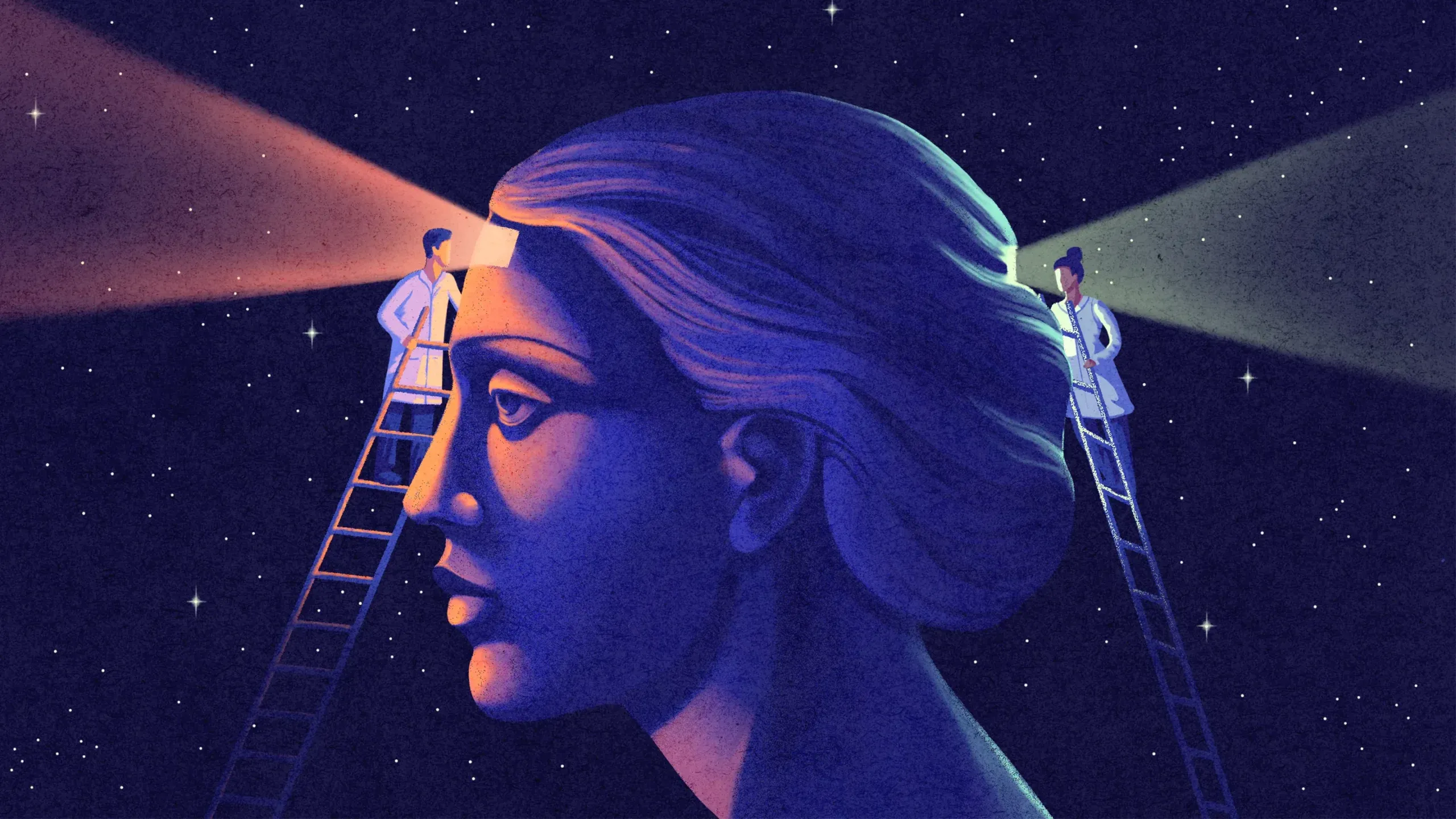
Modern life is shaped by contradiction. People are expected to be confident yet humble, independent yet connected, innovative yet responsible. These opposing demands often feel overwhelming, especially in a world that rewards simplified answers and polarized thinking. The concept of dichosity offers a powerful way to understand this complexity rather than fight against it.
Dichosity refers to the coexistence and interaction of two contrasting or opposing elements within a single system, experience, or idea. Instead of framing reality as a battle where one side must defeat the other, dichosity recognizes that meaning, growth, and balance often emerge from tension itself. This concept is not limited to philosophy or psychology; it influences decision-making, culture, technology, communication, and personal development.
As societies become more complex and interconnected, understanding dichosity is no longer optional. It is a practical framework for navigating uncertainty, resolving conflict, and thinking clearly in a world that resists simple explanations.
What Is Dichosity?
Dichosity describes a condition in which two opposing forces exist together within one unified structure. These forces may conflict, complement, or regulate one another, but they are rarely independent. Their interaction defines the system itself.
Unlike rigid division, dichosity emphasizes relationship rather than separation. The opposing elements gain meaning through their connection. Logic becomes meaningful in contrast to emotion. Stability is understood through change. Freedom carries significance because of responsibility.
Dichosity does not claim that all opposites are equal or harmonious. Instead, it acknowledges that tension is often productive. When one side is removed entirely, imbalance occurs. Understanding dichosity allows individuals and systems to function with greater realism and resilience.
The Philosophical Foundations of Dichosity
Long before the term gained modern usage, the idea behind dichosity shaped philosophical thought. Thinkers across cultures recognized that reality is structured through contrast rather than uniformity. Movement exists because of stillness. Identity forms through difference. Meaning emerges through comparison.
Philosophical dichosity appears wherever two valid principles collide without a final resolution. Ethical dilemmas often arise because honesty and compassion, justice and mercy, or freedom and safety pull in different directions. These tensions are not mistakes in reasoning; they are signals of complexity.
Rather than seeking to eliminate contradiction, philosophy treats dichosity as a space for deeper understanding. Wisdom does not come from choosing one extreme, but from navigating the space between.
Dichosity in Human Psychology and Inner Life
Human psychology offers some of the clearest examples of dichosity in action. The mind is not a single voice but a dynamic system shaped by competing impulses, emotions, and beliefs. People routinely experience internal contrasts that influence their behavior and identity.
Confidence often exists alongside self-doubt. Desire competes with restraint. Rational planning interacts with emotional response. These inner tensions do not indicate weakness; they reflect psychological depth. Individuals who deny one side of their experience often struggle with imbalance, while those who recognize dichosity develop self-awareness.
Understanding dichosity in psychology helps explain why people feel conflicted, change their minds, or hold seemingly contradictory values. Growth occurs not by eliminating tension, but by learning to integrate it.
Emotional Dichosity and Mental Balance
Emotions are rarely pure or isolated. Love may include fear, joy may coexist with sadness, and hope can persist alongside uncertainty. Emotional dichosity explains why people can experience mixed feelings without being inconsistent or unstable.
Mental balance does not require suppressing one emotion in favor of another. Instead, it involves recognizing emotional contrasts and responding thoughtfully. Emotional intelligence grows when individuals accept that opposing feelings can exist at the same time.
By framing emotions through dichosity, people develop healthier coping strategies and deeper empathy for themselves and others.
Dichosity in Decision-Making and Judgment
Every meaningful decision involves dichosity. Life does not offer perfect choices; it offers trade-offs. Whether choosing a career path, managing relationships, or making ethical decisions, individuals must weigh opposing considerations.
Common decision-based dichosities include security versus opportunity, short-term comfort versus long-term growth, and personal desire versus moral responsibility. Attempts to eliminate tension often lead to regret or indecision.
Those who understand dichosity approach decisions with realism. They accept uncertainty, evaluate competing values, and act with intention rather than illusion. Good judgment is not about finding certainty; it is about managing complexity.
Dichosity in Society and Cultural Structures
Societies evolve through tension. Cultural progress does not arise from consensus alone, but from negotiation between opposing values. Tradition and innovation, authority and freedom, individuality and community all shape social systems.
When societies ignore dichosity, polarization increases. Complex issues are reduced to simplistic narratives, and dialogue collapses into conflict. Recognizing dichosity allows communities to hold disagreement without fragmentation.
Cultural stability depends on the ability to balance competing priorities rather than enforcing uniformity. Dichosity provides the framework for that balance.
Dichosity as a Mindset in a Polarized World
In an era of extreme polarization, dichosity functions as a cognitive and ethical mindset. It allows individuals to understand opposing perspectives without surrendering their own values.
A dichotic mindset emphasizes listening, intellectual humility, and the recognition that most viewpoints contain partial truths. This approach does not weaken conviction; it strengthens reasoning by grounding beliefs in understanding rather than reaction.
People who practice dichosity communicate more effectively, resolve conflicts more constructively, and contribute to healthier discourse both online and offline.
Dichosity in Business, Technology, and Modern Systems
Modern organizations increasingly rely on dichosity to operate effectively. Pure efficiency without creativity leads to stagnation. Pure innovation without structure leads to chaos. Sustainable systems integrate opposing strengths.
In business and technology, dichosity appears in the balance between automation and human judgment, data analysis and intuition, speed and ethical reflection. Artificial intelligence highlights this principle clearly. Automated systems excel at repetition and scale, while humans provide context, ethics, and meaning.
Organizations that ignore dichosity often collapse into extremes. Those that embrace it build resilient, adaptive structures capable of long-term success.
Dichosity in Communication and Language
Communication operates through layers of meaning. What is said and what is implied work together. Tone, context, and silence shape interpretation as much as words themselves.
Linguistic dichosity explains why misunderstandings occur when one layer is ignored. Effective communication requires navigating clarity and nuance, agreement and disagreement, logic and emotion simultaneously.
Strong communicators intuitively understand dichosity, adjusting expression based on context and audience.
Dichosity in Nature and Scientific Systems
Natural systems depend on opposing processes to maintain balance. Growth requires decay, stability requires fluctuation, and life depends on cycles rather than constants.
Scientific understanding advances when apparent contradictions are explored instead of dismissed. Many discoveries emerge from examining tensions between competing theories. Dichosity reveals that complexity is not disorder, but structure at a higher level.
Personal Growth Through Dichosity
Personal development depends on accepting internal tension rather than seeking false simplicity. Dichosity encourages self-awareness, adaptability, and resilience. Individuals who accept complexity are better equipped to handle change, failure, and uncertainty.
Growth is not linear. Identity evolves through contrast and challenge. Dichosity provides the perspective needed to navigate that evolution with clarity.
Dichosity in the Digital Age
Digital life intensifies dichosity. Technology connects and isolates, empowers and overwhelms, informs and misleads. Understanding these contrasts helps individuals engage consciously rather than reactively.
Recognizing digital dichosity allows people to use technology intentionally, preserving autonomy while benefiting from innovation.
The Future Relevance of Dichosity
As systems grow more complex, dichosity will become an essential cognitive skill. Education, leadership, and innovation increasingly require the ability to hold competing ideas without collapsing into extremes.
Those who understand dichosity will navigate uncertainty more effectively and contribute to more thoughtful, resilient systems.
Conclusion
Dichosity is not confusion or contradiction for its own sake. It is a framework for understanding reality as it truly is—complex, dynamic, and shaped by opposing forces. From psychology and society to technology and personal growth, dichosity explains how balance emerges through interaction rather than elimination.
In a world driven by rapid change and polarized thinking, understanding dichosity is essential. It fosters clarity without rigidity, empathy without weakness, and progress without illusion. By embracing dichosity, individuals and systems gain the tools needed to navigate complexity with intelligence and purpose.