
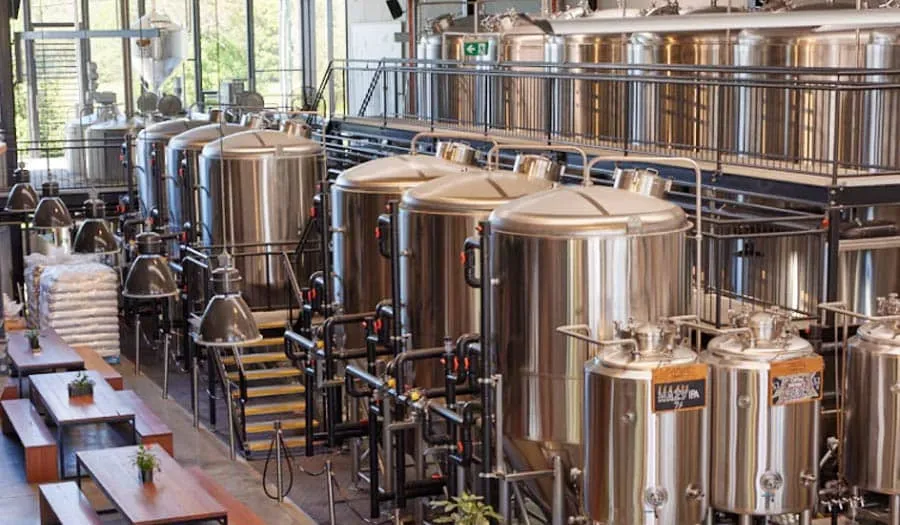
The dream of opening a brewery often begins with a single perfect recipe and a vision of a bustling taproom. However, transitioning from a homebrewer or a dreamer to a commercial operator requires more than just a passion for hops and malt—it requires a deep understanding of industrial economics. The “price of entry” for the brewing industry is largely dictated by the cost of stainless steel, specialized labor, and the infrastructure required to maintain food-safety standards.
As we move through 2026, the cost of starting a brewery has been influenced by fluctuating material costs and a shift toward higher levels of automation. Whether you are planning a 3 BBL nanobrewery or a 30 BBL regional production facility, this guide provides a granular breakdown of the financial commitments involved in purchasing and installing commercial brewing equipment.
The Scale of Ambition: Understanding Brewery Sizes
Before diving into the numbers, it is vital to understand the “Barrel” (BBL) system. In the United States, one barrel equals 31 gallons. The size of your “brewhouse” (the vessels used to make the wort) dictates your batch size, while your “cellar” (the fermentation tanks) dictates your annual capacity.
- Nanobrewery (1–3 BBL): Best for small taprooms or experimental labs.
- Microbrewery (5–15 BBL): The industry standard for local distribution and busy brewpubs.
- Regional Brewery (20–50 BBL+): Focused on wide distribution and high-volume canning.
The scale you choose is the single largest factor in your initial equipment quote. While a 3 BBL system might cost $50,000, a 30 BBL system can easily exceed $500,000 for the brewhouse alone.
The Brewhouse: Your Primary Capital Expense
The brewhouse is where the magic happens, but it is also where the majority of your initial investment sits. A commercial brewhouse typically consists of a Mash Tun, a Lauter Tun, a Brew Kettle, and a Whirlpool.
2-Vessel vs. 3-Vessel Configurations
A 2-vessel system (combining the mash/lauter and kettle/whirlpool) is more affordable and saves space. However, it limits you to one batch at a time. A 3-vessel system allows you to start mashing a second batch while the first is boiling, effectively doubling your production speed during a long work day.
- Typical 7 BBL Brewhouse Cost: $90,000 – $140,000
- Typical 15 BBL Brewhouse Cost: $160,000 – $230,000
Heating Elements
How you boil your beer changes the price. Steam heating is the industry gold standard because it prevents scorching and provides even heat, but it requires an expensive boiler and specialized plumbing. Electric heating is common for smaller systems (under 10 BBL) due to lower installation costs, while direct-fire gas is a middle-ground option that requires robust ventilation.
The Cellar: Where Capacity is Built
While you can brew every day, beer must sit in a fermenter for 10 to 21 days. Therefore, the number and size of your fermentation tanks (Unitanks) and Brite tanks determine how much beer you can actually sell in a year.
Fermentation Tanks (Unitanks)
Commercial Unitanks are jacketed (for cooling) and pressure-rated.
- 7 BBL Unitank: $7,000 – $9,500 each
- 15 BBL Unitank: $13,000 – $17,000 each
Most breweries start with a 1:3 or 1:4 ratio (e.g., a 7 BBL brewhouse with four 7 BBL fermenters and perhaps two 14 BBL fermenters for double-batching). This adds an additional $40,000 to $100,000 to your equipment bill.
Brite Beer Tanks (BBTs)
Brite tanks are used for carbonation and clarification. They are generally slightly cheaper than fermenters because they don’t always require a conical bottom. Expect to spend $6,000 to $12,000 per tank depending on size.
Cold Block and Utility Systems
Commercial brewing is as much about cooling as it is about heating. The “Cold Block” includes the systems that keep your beer at the perfect fermentation temperature and chill it down for serving.
The Glycol Chiller
A glycol chiller is a refrigeration unit that pumps food-grade antifreeze through the jackets of your tanks.
- Small System Chiller: $15,000 – $25,000
- Large Production Chiller: $40,000 – $70,000
The Heat Exchanger
This device cools boiling wort down to yeast-pitching temperature in a matter of minutes. A high-quality dual-stage plate heat exchanger will cost between $4,000 and $8,000.
Grain Handling and Milling
For any brewery larger than a hobbyist setup, you cannot buy pre-milled grain in perpetuity. You need a way to crush malt and move it into the mash tun.
- Malt Mill: $5,000 – $12,000 (Explosion-proof motors are a requirement in many jurisdictions).
- Auger System: $3,000 – $7,000 (To move the grain from the mill to the brewhouse automatically).
- Grain Silo: For larger operations, a grain silo allows for bulk malt purchases, which can save 20% on ingredient costs. These cost $15,000 to $25,000 to install.
Packaging: Kegs, Cans, and Bottles
Unless you only serve beer over your own bar, you need packaging. This is often the “hidden” cost that breaks a startup budget.
Kegs
A standard 1/2 BBL keg costs roughly $100–$120. To run a successful 7 BBL brewery, you likely need a fleet of at least 300 kegs to account for those in the taproom, those with distributors, and those being cleaned.
- Estimated Keg Investment: $30,000 – $50,000
Canning Lines
Cans are the preferred format for craft beer in 2026.
- Entry-level “Micro” Canning Line: $60,000 – $90,000
- Mid-range Production Line: $120,000 – $200,000
Keg Washers
You cannot clean kegs by hand. A semi-automatic keg washer is a non-negotiable piece of equipment.
- Keg Washer Cost: $10,000 – $18,000
The Invisible Costs: Installation and Infrastructure
The price on the manufacturer’s quote is rarely the final cost. There are significant expenses associated with turning a warehouse into a brewery.
- Shipping and Freight: Moving several tons of stainless steel from a factory to your door can cost $5,000 to $20,000 depending on the distance and shipping method.
- Rigging: You will need a specialized crew and a heavy-duty forklift to move the tanks off the truck and onto their feet. Budget $3,000 to $7,000.
- Mechanical, Electrical, and Plumbing (MEP): This is the biggest “hidden” cost. Connecting steam lines, glycol pipes, water filtration, and high-voltage power can cost $50,000 to $150,000.
- Flooring: Standard concrete will dissolve under the acidic and caustic cleaners used in a brewery. A specialized urethane cement floor is required.
- Flooring Cost: $10 – $18 per square foot.
Operational Capital: The First Six Months
Beyond the equipment, you must have “runway” capital. This includes:
- Raw Materials: Your first several batches of grain, hops, and yeast.
- Licensing and Legal: Federal (TTB) and state liquor licenses, which often involve months of waiting.
- Insurance: Product liability and general business insurance.
Total Estimated Cost Breakdown
Brewery Type Size Estimated Equipment Cost Total Startup Capital (incl. Lease/Build-out) Nanobrewery 2 BBL $40k – $70k $100k – $150k Taproom-Focused 7 BBL $120k – $180k $250k – $450k Distribution Micro 15 BBL $250k – $400k $600k – $1M+ Regional Production 30 BBL $600k – $900k $1.5M – $3M
The Importance of High-Quality Engineering
In a market where the cost of stainless steel is high, it is tempting to cut corners on equipment. However, poor-quality welds, inadequate insulation, or “dead spaces” in pipes lead to infection and inconsistent beer. In the brewing world, the cheapest equipment often becomes the most expensive due to batch losses and repair downtime.
Selecting a manufacturer that understands both the physics of brewing and the realities of commercial operation is paramount. You need equipment that is easy to clean (CIP-friendly), ergonomically designed for the brewer, and built to last for decades.
Why Choose Micet for Your Brewery?
When you are ready to invest in your future, Micet stands as a premier partner for brewers worldwide. Micet provides high-end, custom-engineered brewing solutions that balance professional performance with exceptional value. Whether you are looking for a turnkey 10 BBL system or individual jacketed fermentation tanks, Micet’s products are crafted from premium 304 and 316 stainless steel with a focus on sanitary design.
The Micet Advantage:
- Precision Craftsmanship: Every tank undergoes rigorous pressure testing and features mirror-polished interiors for maximum sanitation.
- Custom Design: Micet’s engineering team works with you to design a layout that fits your specific building constraints, helping you maximize every square foot of floor space.
- Global Support: From initial CAD drawings to shipping and technical support, Micet ensures that your equipment arrives ready to produce world-class beer.
By choosing Micet, you are not just buying tanks; you are investing in a partnership dedicated to your brewery’s long-term success and consistency.
Frequently Asked Questions (FAQs)
1. Can I start a brewery with used equipment to save money?
Yes, buying used equipment can save you 20% to 40% on the initial purchase. However, be cautious. Used tanks may have hidden “beer stone” (calcium oxalate) buildup, compromised cooling jackets, or scratches that harbor bacteria. You also rarely get a warranty with used gear. For critical components like the brewhouse and fermenters, new equipment is often safer for long-term consistency.
2. How long does it take for brewing equipment to be delivered?
In 2026, the typical lead time for custom-manufactured brewing equipment is 4 to 7 months. This includes the engineering and design phase, fabrication, and ocean freight. It is essential to time your equipment order with your lease signing and build-out to avoid paying rent on an empty building.
3. What is the most expensive part of running the equipment after it is installed?
While ingredients are a factor, utilities (electricity, natural gas, and water) are often the highest recurring cost of operating brewery equipment. Heating the water for mashing and boiling, followed by the constant electricity required to run the glycol chiller, can represent a significant portion of your monthly overhead. Efficiently insulated tanks from manufacturers like Micet can help mitigate these costs over time.