
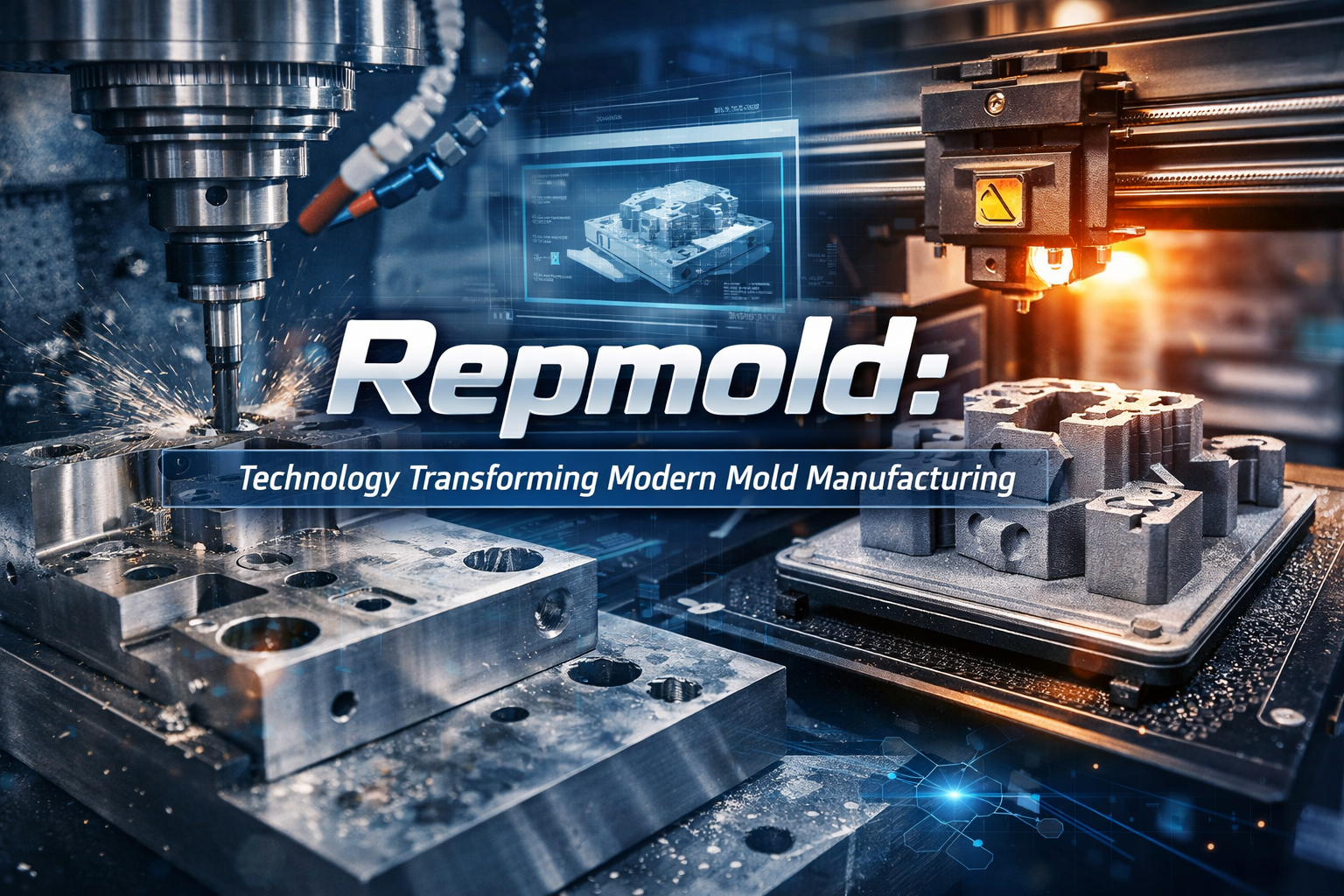
Modern manufacturing is evolving rapidly as industries search for faster, more efficient, and more sustainable ways to produce complex products. One concept gaining attention in industrial engineering and production environments is Repmold. This approach focuses on recreating or replicating molds used in manufacturing so that companies can maintain production without redesigning entire systems.
Molds play a critical role in many manufacturing processes. They shape materials such as plastic, metal, rubber, or composite substances into finished components. Over time, however, molds wear out, become damaged, or go missing due to long production cycles. When this happens, manufacturers must either redesign the mold or recreate it using advanced techniques. This is where Repmold becomes valuable.
Repmold represents a modern approach that combines digital technology, precision engineering, and advanced manufacturing tools to reproduce molds accurately and efficiently. By using methods such as digital modeling, reverse engineering, 3D scanning, and automated machining, companies can rebuild molds with minimal downtime. This helps businesses maintain productivity, reduce waste, and preserve the original design specifications of critical parts.
As global industries demand higher precision and faster production cycles, Repmold is becoming an increasingly important solution in modern manufacturing systems.
What Is Repmold?
The Basic Definition of Repmold
Repmold refers to the process of recreating or rebuilding an existing mold in order to reproduce parts accurately and maintain manufacturing operations. Instead of designing a new mold from scratch, engineers analyze the original mold or component and replicate its structure using modern engineering methods.
This process ensures that the reproduced mold matches the original design as closely as possible. Accuracy is extremely important because even minor deviations in mold geometry can affect the final product. When done correctly, Repmold allows manufacturers to continue producing identical components without interrupting production lines.
The Core Idea Behind Repmold Technology
At its core, Repmold is built around efficiency and precision. Manufacturing companies often rely on molds that have been used for many years. In some cases, the original design documentation may no longer exist, making it difficult to produce replacement tooling.
Repmold solves this problem by analyzing the physical mold or product and rebuilding the mold digitally and physically. This method preserves the original design while eliminating the need for expensive redesign processes.
By combining advanced technologies with traditional engineering expertise, Repmold creates a reliable pathway for maintaining industrial production systems.
How Repmold Works
Digital Modeling and Mold Analysis
The Repmold process usually begins with a detailed inspection of the existing mold or component. Engineers evaluate the condition of the mold to determine whether replication is possible. Measurements, scans, and dimensional analysis are performed to capture the exact geometry of the original part.
Once this information is collected, engineers create a digital model using computer-aided design (CAD) software. The digital model serves as the foundation for rebuilding the mold.
This stage is crucial because the accuracy of the digital model directly affects the quality of the final mold.
Reverse Engineering and Mold Reconstruction
After the digital model is created, engineers apply reverse engineering techniques to recreate the mold. Reverse engineering involves analyzing an existing object to understand how it was originally designed and manufactured.
Technologies such as 3D scanning, laser measurement systems, and computer modeling tools are often used to reconstruct detailed shapes and structures. These tools allow engineers to capture extremely precise measurements.
Once the digital design is finalized, engineers prepare it for manufacturing.
Mold Fabrication and Testing
The next step involves producing the physical mold. Depending on the application, molds may be manufactured using CNC machining, additive manufacturing, casting, or hybrid fabrication methods.
After the mold is produced, it undergoes testing to ensure that it performs correctly. Trial production runs verify that the mold produces parts that meet the required dimensions and performance standards.
Only after successful testing does the mold move into full production use.
Key Technologies Used in Repmold Systems
Computer-Aided Design (CAD)
CAD technology is one of the most important tools in modern Repmold systems. Engineers use CAD software to create precise digital representations of molds and components.
These digital models allow engineers to analyze geometry, test design improvements, and ensure that the recreated mold matches the original specifications.
3D Printing and Additive Manufacturing
Additive manufacturing technologies such as 3D printing have become valuable tools in mold replication. Engineers can use 3D printers to produce prototype molds or master patterns quickly.
This allows manufacturers to evaluate mold designs before committing to full-scale production. In some cases, 3D printed molds can even be used for short production runs.
CNC Machining and Precision Engineering
CNC machining is widely used in Repmold manufacturing because it provides extremely high levels of accuracy. Computer-controlled machines cut metal or other materials with micron-level precision.
This ensures that molds maintain the exact dimensions required for consistent manufacturing results.
Artificial Intelligence and Smart Manufacturing
Some modern manufacturing environments are beginning to integrate artificial intelligence into mold design and production. AI systems can analyze production data, identify design improvements, and predict potential defects before molds are manufactured.
These smart manufacturing tools enhance the efficiency and reliability of the Repmold process.
Advantages of Using Repmold
Faster Production Cycles
One of the most important benefits of Repmold is the ability to reduce production delays. Traditional mold design may take weeks or even months. Repmold shortens this timeline by replicating existing designs rather than starting from scratch.
This allows manufacturers to restore production much faster.
Lower Manufacturing Costs
Designing entirely new molds can be expensive. Repmold reduces costs by using existing molds as references. Companies avoid large engineering expenses while still maintaining high-quality production standards.
Improved Accuracy and Consistency
Because the replication process relies on precise measurements and digital modeling, Repmold ensures consistent results across production cycles. This consistency is essential for industries that require strict quality control.
Reduced Material Waste
Repmold also supports sustainable manufacturing practices. By restoring molds instead of discarding them, companies reduce material waste and extend the lifespan of industrial tools.
Industries That Benefit from Repmold Technology
Automotive Manufacturing
The automotive industry relies heavily on molds to produce components such as dashboards, panels, and engine parts. Repmold allows manufacturers to reproduce molds quickly, ensuring that production lines remain operational.
Aerospace Engineering
Aerospace components require extremely precise molds to meet strict safety and performance standards. Repmold helps aerospace manufacturers maintain accuracy while minimizing production delays.
Medical Device Manufacturing
Medical devices often require complex molds with very tight tolerances. Repmold technology allows manufacturers to recreate these molds with high precision, ensuring consistent product quality.
Consumer Electronics
Electronics companies frequently produce plastic housings and internal components using molds. Repmold supports rapid production adjustments and efficient tooling maintenance.
Repmold vs Traditional Mold Manufacturing
Traditional mold manufacturing usually involves designing molds from the ground up. Engineers create new blueprints, perform extensive testing, and manufacture tooling through lengthy processes.
Repmold takes a different approach by replicating existing molds. Instead of redesigning everything, engineers analyze the original mold and recreate it with modern tools.
This approach significantly reduces development time, cost, and complexity while maintaining the original product specifications.
Challenges and Limitations of Repmold
Despite its advantages, Repmold is not suitable for every situation. If the original mold is severely damaged, there may not be enough information available to recreate it accurately.
Additionally, some materials used in older molds may be difficult to replicate exactly. Engineers must carefully select replacement materials that offer similar performance characteristics.
Another challenge is the need for skilled professionals. Accurate mold replication requires expertise in engineering, measurement technology, and manufacturing processes.
The Future of Repmold in Industry 4.0
As manufacturing enters the era of Industry 4.0, technologies such as automation, data analytics, and digital production systems are becoming more common. Repmold fits naturally into this environment because it relies heavily on digital modeling and precision engineering.
Smart factories can use digital twins, AI-powered design tools, and automated manufacturing systems to replicate molds faster and more accurately than ever before.
In the future, these technologies may allow molds to be recreated almost instantly from digital data, further reducing production delays.
Why Repmold Is Important for Sustainable Manufacturing
Sustainability has become a major priority for modern industries. Manufacturing processes that reduce waste and conserve resources are increasingly valuable.
Repmold contributes to sustainability by extending the life of molds and equipment. Instead of discarding damaged tooling, companies can rebuild and reuse molds through replication processes.
This reduces raw material consumption, lowers energy use, and supports environmentally responsible production practices.
Conclusion
Repmold represents an important advancement in modern manufacturing strategies. By combining digital design tools, precision engineering, and advanced fabrication technologies, Repmold enables industries to recreate molds efficiently and maintain production continuity.
The process helps companies save time, reduce costs, and minimize environmental impact while preserving the accuracy of existing product designs. From automotive manufacturing to aerospace engineering and medical device production, many industries rely on mold precision to maintain quality and reliability.
As manufacturing technology continues to evolve, Repmold will likely play an even greater role in supporting smart factories, digital production systems, and sustainable industrial practices. By enabling efficient mold replication and restoration, Repmold ensures that industries can continue innovating while maintaining the tools that shape the products of modern life.