
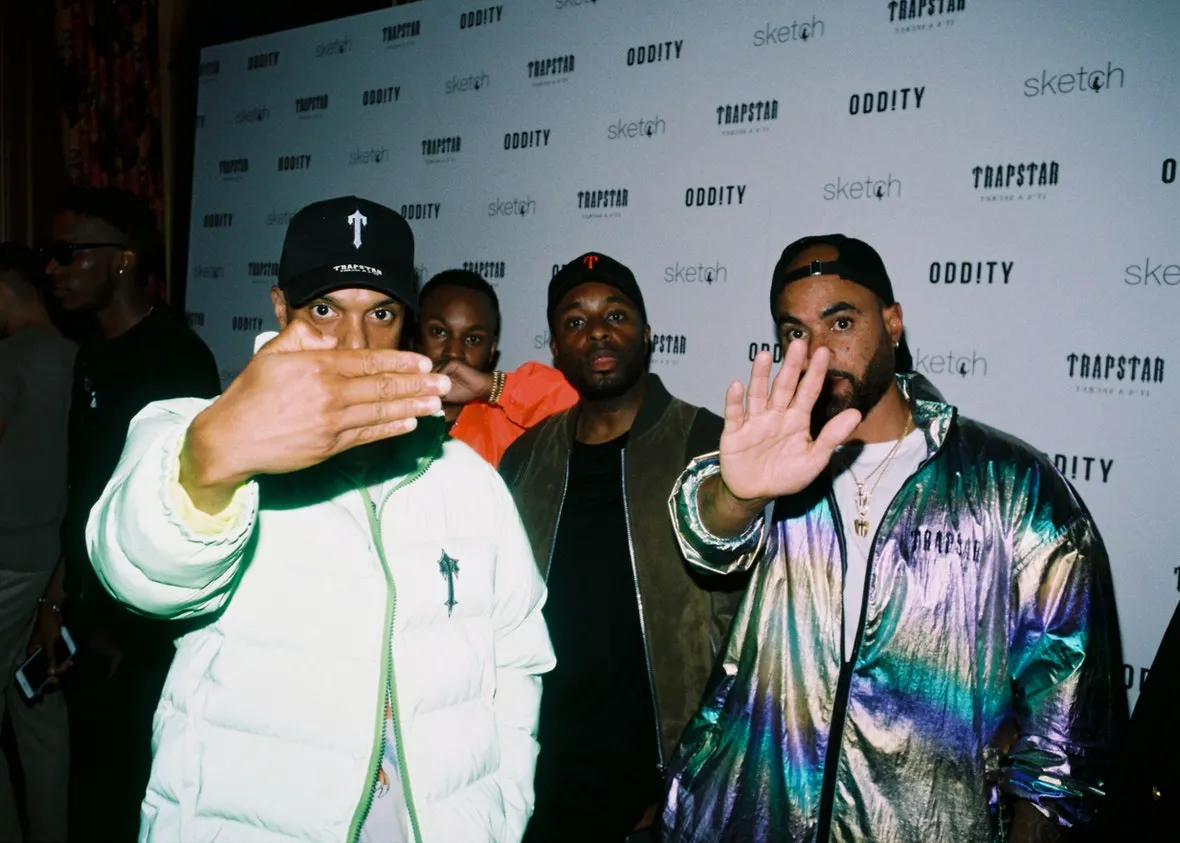
Few streetwear brands carry the kind of raw, underground credibility that Trapstar has built since its early days in West London. What started as three friends customizing t-shirts in Notting Hill back in 2005 has grown into one of the most recognized names in global street fashion. No billboards, no traditional advertising, no industry connections — just authentic culture, bold design, and a community that understood the assignment before anyone else did.
The brand’s journey from hand-delivered orders in pizza boxes to Jay-Z’s Roc Nation signing the deal in 2013 is the kind of story that doesn’t get manufactured in a marketing boardroom. It happened because Mikey, Lee, and Will built something real. Their philosophy — “It’s A Secret” — wasn’t just a tagline. It was a way of life that turned Trapstar into a cult before the mainstream even knew what was happening.
From Notting Hill to Global Streetwear Icon
The early days of Trapstar were built entirely on word of mouth. Between 2005 and 2008, the brand operated with no retail presence whatsoever. Customers had to reach out through MySpace to place orders, and pieces were delivered by hand. That scarcity wasn’t a strategy — it was the reality of three young guys building something from scratch. But that reality accidentally created one of the most powerful things a brand can have: exclusivity born from genuine hustle rather than manufactured hype.
The pop-up “Invasion” events that followed were guerrilla marketing before anyone called it that. Surprise activations across London, Birmingham, Bristol, and Manchester built a street-level community that no paid campaign could replicate. By the time Roc Nation came knocking, Trapstar had already done the hardest part — it had earned its reputation one drop at a time.
The Aesthetic That Defines a Generation
Trapstar’s visual identity is immediately recognizable. The gothic Alcatraz logo, the bold typographic branding, the dark colorways broken up by sharp accent colors — every design decision feels deliberate and unapologetic. This isn’t fashion trying to look like streetwear. This is streetwear that happens to be fashion.
The brand’s most iconic pieces consistently blend wearability with statement-making energy. Tracksuits that work for a gym session or a night out. Hoodies heavy enough to mean business. T-shirts graphic enough to start conversations. And then there are the jackets — the crown jewel of any serious Trapstar collection.
Kurtka Trapstar: The Jacket That Defines the Collection
If there’s one category that captures everything Trapstar stands for, it’s the jacket lineup. The kurtka trapstar — whether you’re talking about the Irongate puffer, the Decoded bomber, or the stadium university jacket — represents the pinnacle of what the brand does best. Premium materials built to handle real weather, silhouettes that carry authority without trying too hard, and branding that communicates membership in something bigger than fashion.
The Irongate series in particular has become synonymous with the brand’s identity. Detachable hoods, reinforced construction, and that unmistakable Trapstar graphic treatment across the chest — these are pieces built to last seasons, not just one winter. The insulation keeps up with genuine cold weather while the design keeps up with the streets. That combination of function and credibility is harder to pull off than it looks, and Trapstar has been doing it consistently for years.
Celebrity Endorsement Without the Contract
One of the most telling signs of Trapstar’s authenticity is who wears it and why. Rihanna, Stormzy, The Weeknd, A$AP Rocky, Cara Delevingne — none of these artists were paid to be seen in Trapstar. They wore the brand because they respected what it stood for. In an industry drowning in paid partnerships and forced collaborations, that kind of organic celebrity alignment is genuinely rare and genuinely valuable.
When Jay-Z’s team first noticed the brand, it was because a Roc Nation A&R executive showed up to a meeting wearing a Trapstar hoodie. That moment led to two years of conversations and eventually to the brand becoming the first fashion label signed to Roc Nation. The deal didn’t change what Trapstar was — it amplified it.
Why Trapstar Still Hits Different
In a streetwear landscape crowded with brands chasing hype cycles and trend forecasts, Trapstar remains stubbornly itself. The designs don’t chase what’s popular — they set the tone and let the culture follow. The quality doesn’t cut corners to hit lower price points — it holds firm because the community expects nothing less.
Whether you’re building your first serious streetwear wardrobe or adding to a collection that already knows what it wants, Trapstar delivers pieces that hold their value — in quality, in resale, and in cultural relevance. From the tracksuits to the t-shirts to the jackets that started conversations in Notting Hill two decades ago, this is a brand that has never once forgotten where it came from.
Disclaimer
This article is for informational and editorial purposes only. It is not sponsored by, affiliated with, or officially endorsed by Trapstar or any of its parent companies, partners, or associated brands. All trademarks, brand names, and product names mentioned are the property of their respective owners. The views expressed are based on publicly available information, cultural analysis, and personal opinion, and are intended to celebrate and discuss the influence of the brand within the streetwear industry. Product availability, collaborations, and historical details may change over time. Readers are encouraged to visit official Trapstar channels for the most accurate and up-to-date information.