
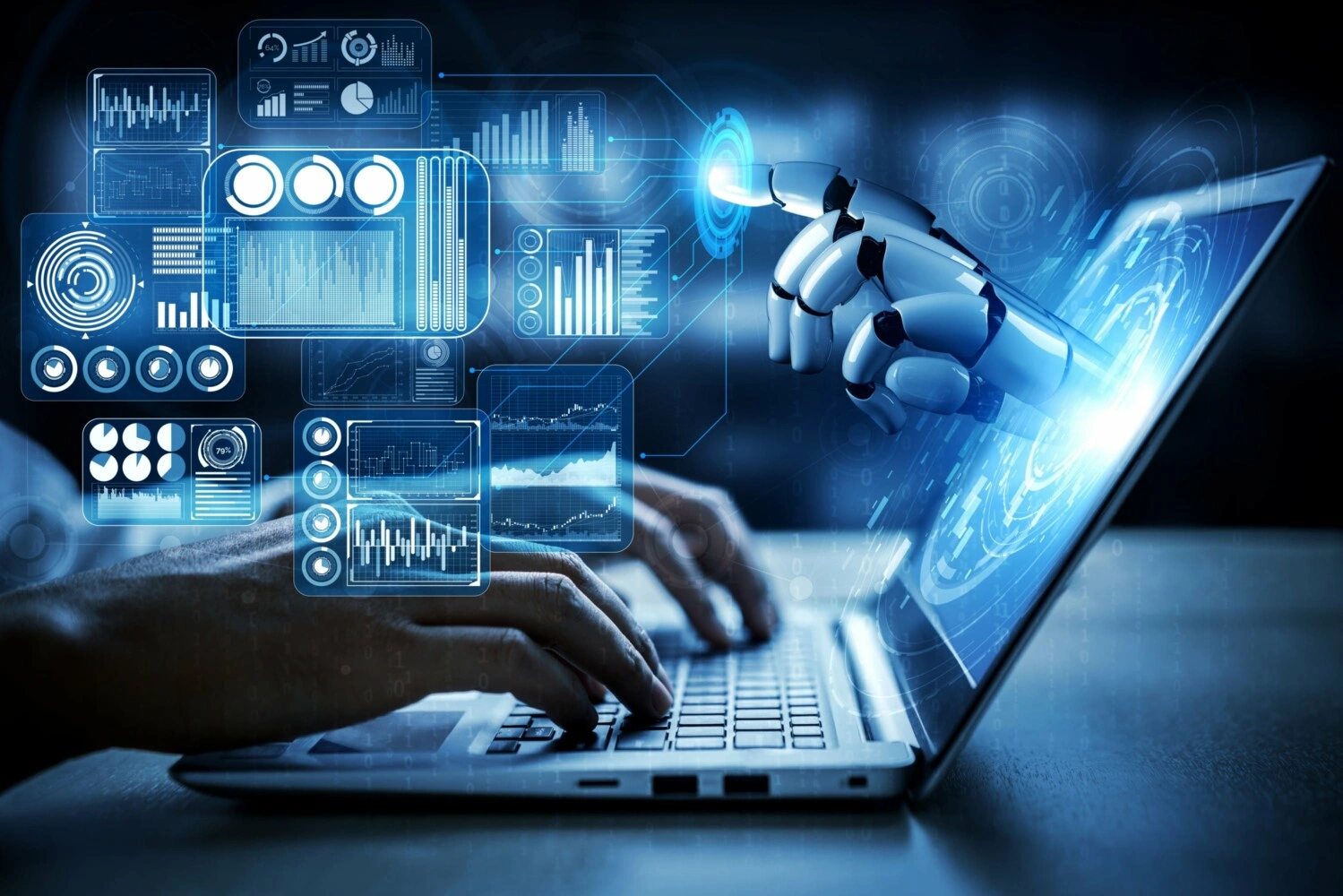
In the modern professional landscape, time is no longer just money; it is the ultimate competitive advantage. For decades, we have been told to “work smarter, not harder,” yet most of us remain buried under a mountain of repetitive administrative tasks, fragmented communication, and data entry. We are living in a paradox where we have more tools than ever, but less focus. This is where the strategic implementation of AI productivity automation fundamentally shifts the trajectory of your career or business. By offloading the “busy work” to intelligent digital systems, you don’t just save minutes; you reclaim your cognitive energy for the high-level strategy and creative problem-solving that actually drive results.
As industry experts in workflow engineering, we have seen that the most successful professionals of the next decade won’t be those who work the longest hours, but those who effectively manage their “Digital Clones”—automated systems that act as force multipliers for their output. In this guide, we will explore the core pillars of AI-driven efficiency, the mechanics of intelligent task orchestration, and how to build a personalized automation stack that operates 24/7, even when you are offline.
The Cognitive Shift: From Task Management to AI Orchestration
To master productivity in 2026, one must stop thinking about “to-do lists” and start thinking about “workflow architecture.” Traditional productivity apps are passive; they wait for you to act. AI-driven automation is proactive.
Moving Beyond “If-This-Then-That”
Legacy automation tools (like early versions of Zapier or IFTTT) were rigid. They required a perfect trigger and a linear action. If a single variable changed—such as the format of an incoming email—the automation would break. AI productivity automation introduces “semantic understanding.” Modern AI agents don’t just follow a path; they understand the intent of a task. They can read an unstructured email, determine the priority, extract key dates, and decide which software in your stack needs to be updated without needing a pre-defined template for every possible scenario.
Building Your “Digital Persona” or Clone
The most advanced application of this technology is the creation of a personal productivity clone. This is an AI agent trained on your specific preferences, communication style, and recurring workflows. Imagine an assistant that knows exactly how you like to summarize meeting notes, which Slack channels require your immediate attention, and how to draft emails that sound exactly like you. This isn’t just about speed; it’s about maintaining your professional presence across multiple platforms simultaneously while you focus on deep work.
Core Pillars of AI-Driven Administrative Efficiency
The most significant drain on professional productivity is “administrative friction”—the small, repetitive tasks that interrupt your flow state. AI is uniquely qualified to eliminate these bottlenecks.
Intelligent Inbox and Communication Triage
For the average executive, the inbox is a battlefield. AI automation can act as a sophisticated gatekeeper.
- Sentiment Analysis and Prioritization: AI agents can scan incoming messages across Email, Slack, and LinkedIn to categorize them by urgency and sentiment. Instead of checking your phone 50 times a day, you receive a curated “action list” of the three messages that actually require your brain.
- Autonomous Drafting: Based on your historical data and a knowledge base of your company’s services, the AI can draft 90% of a response. You simply review, refine, and send, turning an hour-long chore into a five-minute review process.
Automated Meeting Intelligence and Follow-ups
Meetings are often where productivity goes to die, primarily because of the administrative overhead that follows them.
- Real-time Synthesis: AI-driven tools now go far beyond simple transcription. They act as “meeting engineers,” identifying action items, assigning them to the correct team members in your project management tool (like Notion or Asana), and summarizing the strategic “why” behind decisions.
- Closed-Loop Automation: Once the meeting ends, the AI can automatically send a summary to all attendees and set reminders for the next milestones, ensuring that no needle-moving task falls through the cracks.
Data Orchestration: Turning Information into Action
We are drowning in data but starving for insights. AI productivity automation excels at moving data between fragmented systems and synthesizing it into something usable.
Cross-Platform Synchronicity
Most professionals use a fragmented tech stack: Salesforce for CRM, Jira for dev tasks, Notion for docs, and Gmail for communication.
- Seamless Data Mapping: An AI automation engineer can build bridges between these tools that operate with cognitive logic. If a client’s status changes in your CRM, the AI can autonomously update the project timeline in your management tool and draft a “check-in” message to the account manager.
- Eliminating Manual Entry: By using AI to parse PDFs, invoices, and spreadsheets, you eliminate the human error associated with manual data entry. The AI “reads” the document and populates the correct fields in your database with near-perfect accuracy.
Insight Synthesis and Executive Reporting
Instead of spending your Friday afternoon compiling weekly reports, AI can do it for you. It can query all your connected platforms, analyze performance metrics against your KPIs, and generate a human-readable report that highlights risks and opportunities. This shifts your role from a “data aggregator” to a “data-driven strategist.”
The “Human-in-the-Loop” Security and Control Framework
Granting AI control over your digital life requires a robust framework for security and oversight. High-level productivity automation is built on a foundation of trust and human agency.
Maintaining Privacy and Data Integrity
When implementing AI productivity automation, data privacy is paramount. Professional-grade AI tools ensure that your data is siloed and encrypted. Your “Digital Clone” is built on your proprietary data and is never used to train public models. This ensures that sensitive client information or internal strategic plans remain entirely within your controlled environment, meeting SOC 2 and GDPR standards.
The Power of Final Approval (HITL)
Automation should never mean “abdication.” The most effective systems utilize a “Human-in-the-Loop” (HITL) architecture. The AI performs the heavy lifting—gathering, drafting, and organizing—but it pauses before any high-stakes external action. It presents the draft to you for a final “one-click” approval. This maintains the speed of a machine with the nuance and authority of a human expert. It allows you to scale your output without ever losing your “personal touch.”
Implementation: How to Build Your Automation Stack
Transitioning to an AI-automated workflow doesn’t happen overnight; it requires a strategic, phased approach.
Identifying High-ROI Workflows
Start by auditing your week. Look for tasks that are:
- High Frequency: Things you do every day or several times a week.
- Low Cognitive Load: Tasks that don’t require your unique creative spark (e.g., scheduling, data moving, basic summarizing).
- Trigger-Based: Tasks that always happen after a specific event (e.g., a lead fills out a form). These are your prime candidates for automation. Automating just three of these tasks can often save 5–10 hours per week.
Partnering with AI Engineering Experts
While many “off-the-shelf” AI tools exist, they often lack the deep integration required for a truly seamless workflow. To reach the highest level of scale, many organizations partner with AI automation engineers to build bespoke “clones” or custom API-driven workflows. These custom solutions are designed to fit your specific business logic, ensuring that the automation feels like a natural extension of your team rather than a clunky add-on.
Conclusion: The Future belongs to the Automated
The line between “overwhelmed” and “high-performing” is now defined by your ability to leverage machine intelligence. AI productivity automation is no longer a luxury for tech-forward early adopters; it is the fundamental infrastructure for any professional who intends to remain relevant in a rapidly accelerating economy. By delegating the mechanical to the machine, you liberate the human to do what they do best: innovate, connect, and lead.
The goal is not to work more; the goal is to be more. By building your digital workforce today, you are securing your time for tomorrow.